Tuesday, November 23, 2010

152. JOHNNY HERO

Johnny Hero is a 13 inch figure made by Rosko Industries for Sears in 1965 as an alternative to GI Joe. He disappeared a few years after as apparently an alternative was not required. He was repackaged briefly (probably to dump unsold stock) as an Olympic Hero. Johnny came with a red number 16 shirt, gold shorts, socks and white tennis shoes. His body was a heavy foam with plastic hands and head. He had a metal prong in his hand that helped him hold a baseball or football.

Once you bought your basic Johnny you could then buy accessory sets from your favorite baseball and football teams. It is not unusual to find later sets with mixed accessories. You may find a Vikings helmet with Redskins pants and an Eagles jersey.

One of the problems with this line was getting the helmets and clothes off on and off of the figures. The foam rubber would tear easily and the helmet was nearly impossible to get on without cracking it or scraping Johnny's ears. That short production run also means that these figures are hard to find. Just a few years ago, you could find Johnny Hero MIB for under $50 and equipment sets for under $10. Now boxed figures regularly sell for $75-$125 and equipment sets for $25+. Well, I find mine in a local city thrift shop for just a hundred pesos! That's a heroic feat!

151. Busted: JOSE RIZAL by Guilermo Tolentino

A small cast cement bust of our national hero, Dr. Jose Protacio Rizal, cast from an old mold made by National Artist for Sculpture, Guillermo EstrellaTolentino. Tolentino was a product of Philippine art’s Revival period, and studied at the Royal Academy of Fine Arts in Rome. In 1925, he joined the University of the Philippines School of Fine Arts as a professor and later became its fourth director (1952-55). Some of his well-known works include: The Bonifacio Monument, in Caloocan City (1933), The UP Oblation, at the University of the Philippines (1935), Venus, and the Alma Mater statue of the University of the East (1957).

This particular Rizal bust, which is only about 7 inches high, is numbered at the nape, and possibly dates back to the 1950s. It was offered on ebay but was unsold. The bust is bare cement, without paint, and was made to decorate a desk or a shelf.

Thursday, November 11, 2010

150. Gameboard : OUR LADY OF BARANGAY


The devotion to the Birheng Sang Barangay (Our Lady of Barangay) had its beginnings in 1954, when a Filipinized image of the Virgin was painted by a former leprosarium inmate, Crisogono Domingo for the Catholic action group, Barangay Sang Birhen Association in Cadiz City. From a local devotion, the following spread nationwide, and this rare gameboard--found in Cubao X--was made in 1958 by the Catholic Trade Center to further encourage Filipinos to "find your way to Mary". The game pieces are long gone, but one could easily figure out the objective of the game--which is a race to the shrine of our Lady of Barangay, with stopovers at various churches in the country.


Today, the Shrine of Our Lady of Barangay can be found in Tagbilaran City in Bohol, which is known as "Simbahan Lingin" or the Cogon Shrine where the image is now housed.

149. STARSKY & HUTCH: TV's Streetwise Cops

One of my fave cop-and-criminal TV series in 70s was "Starsky & Hutch", produced by Spelling-Goldberg Productions, and aired by ABC from 1975-79. Army veteran David Michael Starsky (Paul Michael Glaser) and the blond former Marine Kenneth 'Hutch' Hutchinson (David Soul), were the California cops who prowled the streets of Bay City in theirred and white Ford Gran Torino, looking to chase some criminals on the loose. The two were a study in contrast--one intense and aggressive, the other, cool and reserved.

Starsky & Hutch were ably supported by their underground informant, the jive-talking Huggy Bear (Antonio Fargas) and their non-nonsense boss, Capt. Dobey (Bernie Hamilton). The unforgettable theme music was composed by Lalo Schifrin.

For 4 years, Starsky & Hutch thrilled its worldwide audience with their action-packed adventures, but the level of violence had TV network officials worried. Over time, Paul Michael Glaser lost interest in the show while David Soul pursued his other passion--music--making a #1 hit out of the song, "Don't Give Up On Us".

After the 4th season, the ratings declined and Glaser quit, thus releagting the two cop icons to TVland Heaven. The characters were briefly resurrected in 2004, with a film version entitled "Starsky & Hutch: They're the Man" starring Ben Stiller (as Starsky) and Owen Wilson (Hutch).

This hardbound, "The Starsky & Hutch Story", an authorized edition based on the TV series was released in 1977, for David Soul and Paul Michael Glaser fans who can't get enough of these two cute Southern California cops!

148. PINBACK: Saturday Night Fever

Saturday Night Fever, the movie that popularized Disco and catapulted John Travolta to international stardom was a global blockbuster hit of 1977 and 1978. As Tony Manero, the dashing Italian-American who ruled the Brooklyn disco scene with girlfriend Stephanie (Karen Lynn Gorney). This pinback button is a memento from those heady disco days when people bumped, grind and hustled their way to the music beat of the Village People, Sylvester, Donna Summer, Cerrone, Van McCoy, Hues Corporation, Chaka Khan--and of course, the Bee Gees. The long-haired Australian band with their highstrung falsetto voices thrilled us no end with songs from the Saturday Night Fever album that became a hot blockbuster hit worldwide, giving disco fanatics night fever, night fever, night fever...

Sunday, October 17, 2010

147. Building Creative Minds with TINKERTOY

One of the earliest--and best--Christmas presents I received from my parents as a kid was a canister of Tinkertoy-ordered from the commissary of Clark Field, no less! I got this special gift in 1964, at age 7, and I was delighted no end, keeping me occupied for hours constructing figures, pinwheels, watchtowers, vehicles, animated ferris wheels and robots from colored sticks and spools, supplemented with cardboard cut-outs. All I had to do was follow the instruction guide that came with the set. I played with the set until it literally fell apart and until now, I could visualize the fantastic things I could create with this unique toy created in 1914 by Charles H. Pajeau and Robert Pettit of Illinois. Pajeau designed the toy after seeing children play with pencils and empty spools of thread--and thus Tinkertoy was born. Today, Hasbro still makes Tinkertoy, in both plastic and classic wood. This complete and unused example of a Junior Tinkertoy was purchased for a few dollars at the famous Antiques Garage Flea Market in New York.

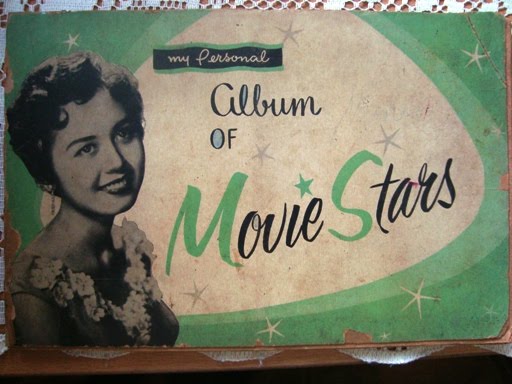
146. CAMAY ALBUM OF MOVIE STARS


Here's a great example of an advertising premium from the popular soap, Camay, made by then Philippine Manufacturing Corporation (PMC), the future Procter & Gamble.


It is an album of beauteous Filipina movie stars of the 50s, with detachable color photos and biographical sketches of famous actresses of the day like Carmen Rosales, Tessie Agana, Linda Estrella, Rosa Rosal, Norma Vales and Nida Blanca.


It is often hard to find an album with all the pictures intact, but this example has them all. Camay has since undergone many relaunches--at one point, even the pronunciation changed into a more Americanized --Cah-mey!


But its association with stars and beautiful women remained. In fact. Camay Girls were some of the most recognizable women on TV in the 60s thru the 80s, a list that includes Pacita Goyena, Tina Artillaga, Maritess Revilla, Cita Revilla, Claudia Bermudez and Zsa-Zsa Padilla. In the 90s, Camay had all but disappeared from the product shelf, but the images of the legendary beauties who promoted the soap lingerin our memoroies--and in albums such as this!